Balkankeuken voor wandelaars: gids Peaks of the Balkans
Many hikers planning the Peaks of the Balkans assume trail food means heavy packs or bland energy bars, but this stunning alpine route offers something far better. Many a guesthous provides authentic Balkan cuisine that fuels your trek while connecting you to local culture. From hearty breakfasts to shepherd hut coffee breaks, you’ll discover how traditional recipes and locally sourced ingredients transform hiking nutrition into a culinary adventure. This guide reveals meal strategies, dietary options, and practical tips for enjoying Balkan food along this remarkable trail.
Inhoudsopgave
- Understanding Balkan Cuisine For Hikers
- Meal Options And Food Strategies Along The Peaks Of The Balkans Trail
- Dietary Considerations And Local Culinary Nuances For Hikers
- Practical Tips For Enjoying Balkan Cuisine On Your Hiking Adventure
- Explore The Peaks Of The Balkans With Authentic Culinary Experiences
- Veelgestelde vragen
Belangrijkste afhaalrestaurants
| Punt | Details |
|---|---|
| Farm-to-table freshness | Guesthouses serve locally sourced meals using generational recipes that support mountain communities |
| Full-board convenience | Breakfasts, packed lunches, and hearty dinners eliminate the need for heavy food packs |
| Self-supported planning | Remote sections require lightweight, calorie-dense foods like nuts and freeze-dried meals |
| Dietary accommodations | Vegetarian options available but gluten-free diets need advance planning due to bread-heavy staples |
| Cultural food moments | Turkish coffee at shepherd huts and traditional dishes enrich your trekking experience |
Understanding Balkan cuisine for hikers
Balkan cuisine stands apart from typical trail food because it’s rooted in centuries-old farming traditions. Mountain communities along the Peaks of the Balkans rely on ingredients grown or raised within walking distance of their guesthouses. You’ll taste the difference in fresh dairy from morning-milked animals, vegetables picked that afternoon, and bread baked in wood-fired ovens. These aren’t convenience foods designed for backpackers but authentic meals that local families have perfected over generations.
The dishes you’ll encounter reflect the region’s agricultural rhythm and seasonal availability. Bean soups simmered for hours provide protein and warmth after long hiking days. Grilled peppers and eggplant dishes showcase summer harvests. Fresh cheeses made from sheep or cow milk appear at nearly every meal, paired with dense breads that sustain energy for mountain climbs. Unlike processed trail snacks, these foods deliver complex carbohydrates, healthy fats, and complete proteins your body needs for multi-day treks.
Cultural food experiences add depth to your hiking adventure beyond simple nutrition. Turkish coffee breaks at shepherd huts offer rest stops where you can chat with locals tending their flocks. Dinner conversations at guesthouse tables introduce you to families who’ve lived in these mountains for generations. Each meal becomes a window into Balkan hospitality and mountain life that you’d miss with a tent and camp stove.
Supporting this local food economy matters for trail sustainability. Your guesthouse payments directly fund family farms and keep traditional recipes alive. When you eat at these mountain establishments, you’re investing in the communities that maintain trail access and welcome hikers year after year. This economic connection makes your culinary choices part of responsible tourism.
Common Balkan trail dishes include:
- Thick bean or lentil soups with smoked meat
- Grilled or roasted seasonal vegetables
- Fresh white cheese similar to feta
- Burek pastry filled with cheese or spinach
- Homemade yogurt and clotted cream
- Dense whole grain breads
Pro Tip: Accept every Turkish coffee invitation from shepherds or guesthouse hosts. These short breaks provide cultural insights and trail beta you won’t find in guidebooks, plus the caffeine boost helps with afternoon climbs.
For hikers choosing zelfgeleide wandeltochten, understanding this food culture helps you plan which sections to rely on guesthouses versus carrying your own provisions. The balance between authentic local meals and pack weight becomes a key trip planning decision.
Meal options and food strategies along the Peaks of the Balkans trail
Guesthouse full-board arrangements provide the most straightforward food strategy for Peaks of the Balkans hikers. Breakfast spreads and generous dinners eliminate meal planning stress while keeping your pack light. Morning tables overflow with hard-boiled eggs, multiple cheese varieties, fresh tomatoes and cucumbers, honey, jam, and thick slices of homemade bread. You’ll fuel up on 600 to 800 calories before hitting the trail, enough for several hours of mountain hiking.
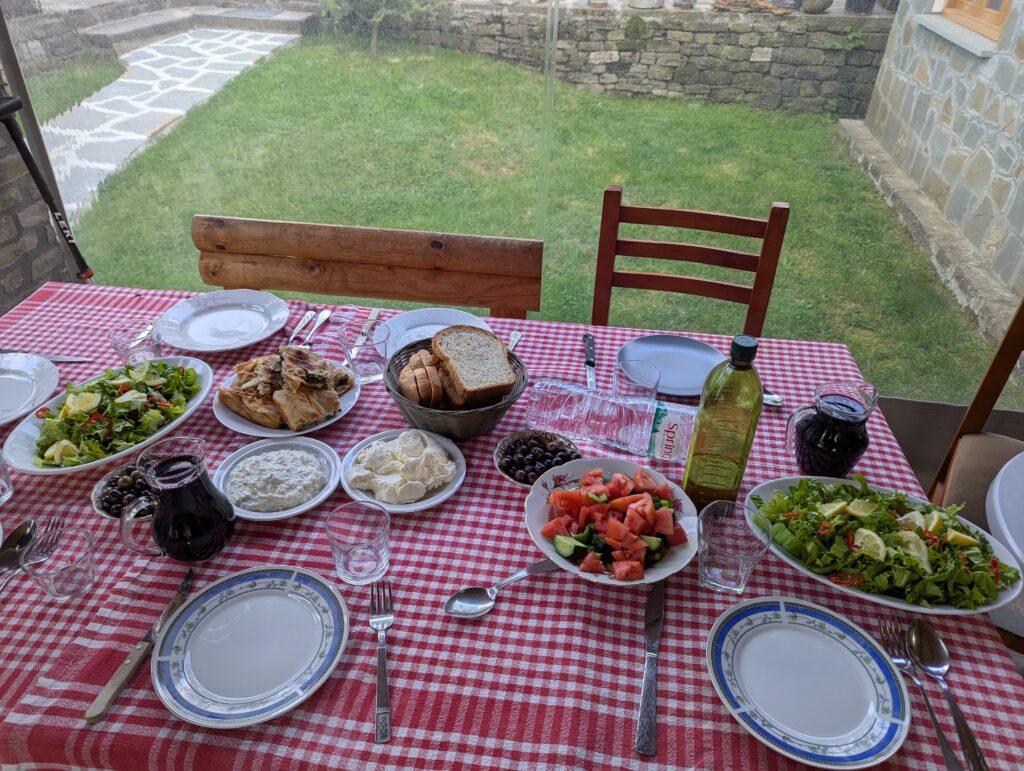
Lunch typically comes as a picnic assembled from breakfast items. Guesthouse hosts wrap cheese, bread, vegetables, and sometimes cured meat for you to carry. This practical approach means no cooking gear needed and minimal pack weight for midday meals. You eat on scenic ridges or beside mountain streams, enjoying simple foods that taste remarkable after morning exertion. Evening dinners bring hot soups, grilled vegetables, salads, and protein dishes that replenish what you’ve burned during 15 to 20 kilometer hiking days.
Self-supported hikers face different logistics and must carefully plan food weight. Carrying 5kg of food per person for 10 days represents the upper limit before pack weight seriously impacts your knees and hiking pace. Lightweight, calorie-dense options become essential: mixed nuts provide 600 calories per 100 grams, dried fruits offer quick energy, and freeze-dried meals deliver hot dinners without refrigeration needs. Energy bars, instant oatmeal, and trail mix round out a self-supported menu that prioritizes calories per gram.
Water sourcing from natural springs requires attention to trail sections and timing. Most valleys have reliable water sources, but high alpine passes may go several hours between springs. Carrying 2 to 3 liters of water capacity ensures you can hydrate properly during long climbs. Treating water with filters or purification tablets adds safety, though many hikers drink directly from high mountain springs without issues.
| Meal Type | Guesthouse Option | Self-Supported Option | Calories |
|---|---|---|---|
| Breakfast | Eggs, cheese, bread, vegetables | Instant oatmeal, nuts, dried fruit | 600-800 |
| Lunch | Picnic from breakfast items | Energy bars, trail mix, jerky | 500-700 |
| Dinner | Soup, grilled vegetables, protein | Freeze-dried meal, instant soup | 700-900 |
| Snacks | Fruit, cookies from guesthouse | Nuts, chocolate, energy gels | 300-500 |
Hybrid strategies combine guesthouse meals with carried food for optimal balance. You might stay at guesthouses in the Peaks of the Balkans every second or third night, carrying lightweight provisions for camping nights between. This approach reduces pack weight while maintaining some autonomy and flexibility. You enjoy authentic local meals regularly without being locked into a rigid guesthouse schedule.
Pro Tip: Pack 200 to 300 extra calories per day beyond your calculated needs. Mountain weather changes and unexpected route variations can increase energy demands, and running short on food at 2000 meters elevation creates serious problems.
Timing your hiking days around guesthouse locations becomes part of route planning. Some trail sections have guesthouses every 15 to 20 kilometers, while others require 30 kilometer days or wild camping. Studying the trail map and guesthouse distribution helps you decide where to carry food versus where to rely on local meals.
Dietary considerations and local culinary nuances for hikers
Vegetarian hikers find reasonable accommodation along the Peaks of the Balkans, though options lean heavily on dairy and eggs. Guesthouses accommodate vegetarians with soy patties, pasta dishes, grilled vegetables, and cheese-based meals. You won’t go hungry, but expect repetition after several days of similar vegetable and dairy combinations. Bringing supplemental protein sources like nuts or protein powder adds variety and ensures adequate nutrition for demanding mountain hiking.
Gluten-free diets present significant challenges in this region where bread forms a dietary cornerstone. Burek pastries, dense mountain breads, and wheat-based soups appear at most meals. Finding gluten-free alternatives requires advance communication with guesthouse hosts or carrying your own provisions. Rice, potatoes, and polenta occasionally appear as starches, but planning to be largely self-sufficient for gluten-free needs prevents frustration and hunger.
Remote trail sections limit dining variety regardless of dietary preferences. When you’re hiking through high alpine passes or camping in wilderness areas, you eat what you carry. This reality makes advance planning essential for anyone with dietary restrictions. Research which guesthouse sections can accommodate your needs and where you’ll need complete self-sufficiency.
Balkan cuisine emphasizes different nutritional elements compared to Mediterranean diets, which impacts hiking energy. Balkan meals focus on proteins and dairy rather than the plant-based and seafood emphasis of Mediterranean cooking. You’ll consume more red meat, cheese, and cream-based dishes. For hiking, this means sustained energy from fats and proteins, though some hikers miss the lighter feeling of Mediterranean vegetable-forward meals.
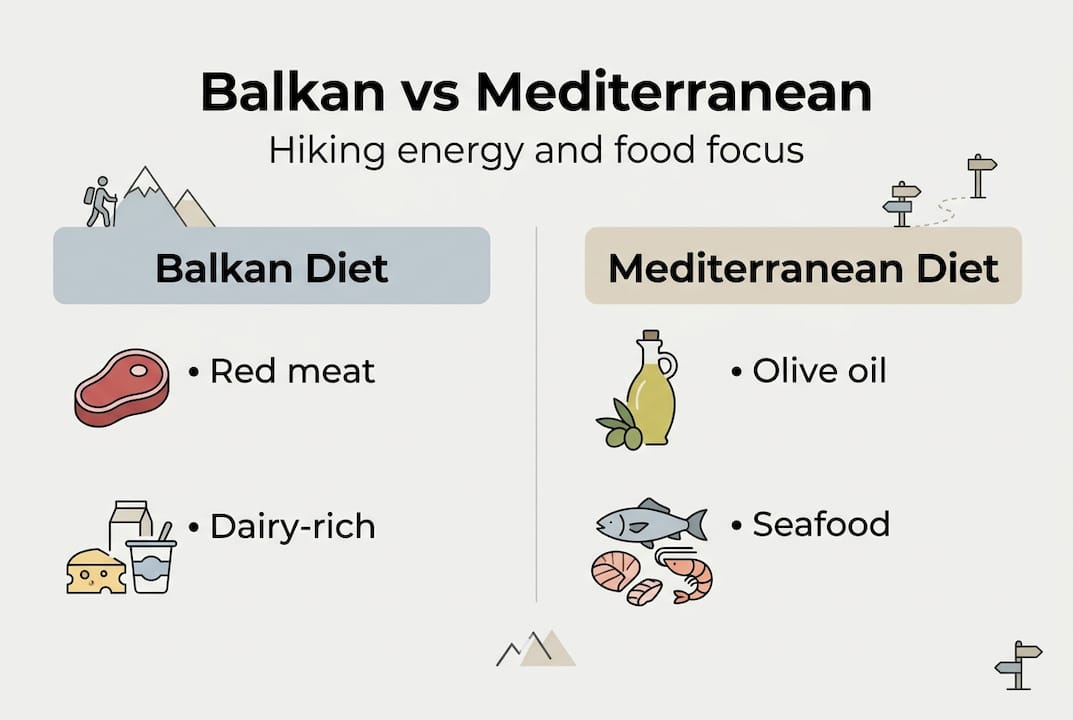
| Aspect | Balkan Diet | Mediterranean Diet | Hiking Impact |
|---|---|---|---|
| Primary proteins | Red meat, dairy, eggs | Fish, legumes, poultry | Heavier digestion, sustained energy |
| Fat sources | Cheese, cream, lard | Olive oil, nuts | Higher saturated fat intake |
| Vegetables | Grilled, pickled, cooked | Raw, fresh, abundant | Less fiber variety |
| Carbohydrates | Dense breads, potatoes | Whole grains, legumes | Quick energy, may feel heavy |
Pack weight from carrying all your food creates physical strain that many hikers underestimate. Carrying 15 to 17 kilograms total pack weight significantly increases knee stress and fatigue on steep descents. Heavy packs from self-food lead to knee strain, making guesthouse reliance attractive for joint health. If you’re over 45 or have previous knee issues, minimizing food weight through guesthouse meals becomes a health decision, not just convenience.
Pro Tip: Test your dietary restrictions at home by eating only foods available in rural mountain regions. If you struggle with limited options for three days at home, you’ll definitely struggle on a 10-day trek where resupply is impossible.
Cultural food expectations differ from Western hiking norms. Locals view meals as social events, not quick fuel stops. Dinner at a guesthouse might last 90 minutes with multiple courses and conversation. Embracing this slower pace enriches your experience, though it requires adjusting expectations if you’re used to eating quickly and moving on. The complete Peaks of the Balkans-gids helps you understand these cultural rhythms before you arrive.
Practical tips for enjoying Balkan cuisine on your hiking adventure
Maximizing your culinary experience while maintaining hiking performance requires strategic planning and cultural awareness. These practical approaches help you enjoy authentic Balkan food without compromising your trek.
-
Pack lightweight, high-energy snacks to supplement guesthouse meals rather than replacing them. Carry 300 to 500 grams of mixed nuts, energy bars, and dried fruit for between-meal hunger without adding significant pack weight.
-
Eat substantial breakfasts and dinners at guesthouses to frontload and backload your daily calories. This strategy lets you carry minimal lunch weight while ensuring adequate nutrition for strenuous hiking.
-
Respect local dining customs by accepting Turkish coffee invitations and trying unfamiliar dishes. Mountain hospitality revolves around sharing food, and declining offers can unintentionally offend hosts who take pride in their cooking.
-
Treat water from natural springs by filtering, boiling, or using purification tablets. While many hikers drink untreated mountain water without problems, waterborne illness can end your trek prematurely.
-
Plan meal breaks around guesthouse locations to minimize carried food weight. Hiking 15 to 20 kilometers between guesthouse breakfasts and dinners requires only light snacks, keeping your pack under 12 kilograms total.
-
Communicate dietary needs to guesthouse hosts at booking time, not upon arrival. This advance notice lets them prepare appropriate meals or honestly tell you if they can’t accommodate restrictions.
Timing your meals affects hiking energy and comfort. Eat breakfast 30 to 45 minutes before starting your hiking day, allowing digestion to begin before strenuous climbing. Take lunch breaks during the warmest midday hours when hiking becomes less pleasant anyway. This schedule aligns food intake with energy demands while providing natural rest periods.
Heavy packs from carrying all food increase injury risk on technical descents where balance matters. If your pack exceeds 15 kilograms, reconsider your food strategy. Shifting to guesthouse meals every night or every other night dramatically reduces weight while improving your daily hiking experience.
Pro Tip: Bring small gifts like quality coffee, chocolate, or regional specialties from your home country to share with guesthouse hosts. This gesture of appreciation opens doors to authentic cultural exchanges and often results in extra generous meal portions.
Food safety practices matter even with fresh local ingredients. Wash raw vegetables and fruits when possible, avoid dairy products that seem off, and trust your instincts about food freshness. Mountain guesthouses lack refrigeration in many cases, relying on cool cellars and daily preparation to keep food safe. Most meals are freshly cooked and served immediately, minimizing safety concerns.
Adapting to local meal schedules enhances your experience. Dinner often happens at 7 or 8 PM, later than many hikers expect after finishing their hiking day at 4 or 5 PM. Use this gap to rest, wash clothes, or socialize with other hikers. The wait makes the meal more satisfying and aligns with local customs around evening dining.
Understanding portion sizes prevents food waste and manages expectations. Guesthouse meals are generous by design, often exceeding what you’d normally eat. It’s acceptable to politely decline second helpings or extra courses if you’re full. Hosts appreciate honesty over forced eating that leads to discomfort on the next day’s hike.
De trail summary and culinary highlights provides section-by-section food availability, helping you plan where to carry provisions versus where guesthouses reliably offer meals. This resource prevents both running out of food and carrying unnecessary weight through well-provisioned sections.
Explore the Peaks of the Balkans with authentic culinary experiences
Ready to combine world-class alpine hiking with authentic Balkan cuisine? Our website connects you with detailed hiking tours that link guesthouses serving traditional mountain meals throughout the Peaks of the Balkans. Whether you prefer self-guided flexibility or group hiking with local experts, we provide resources that turn your culinary curiosity into an unforgettable adventure.
Onze Pieken van de Balkan-wandeltochten feature carefully selected guesthouses in the Peaks of the Balkans where families prepare meals using ingredients from their own farms. You’ll taste the difference that fresh, locally sourced food makes while supporting mountain communities that maintain this remarkable trail. For independent trekkers, our self-guided hiking tours include detailed meal planning resources and guesthouse contact information.
Every meal you enjoy at a mountain guesthouse directly supports families who’ve welcomed hikers for generations. Your culinary choices become part of sustainable tourism that preserves both trail access and traditional foodways. Start planning your Peaks of the Balkans adventure today and discover how authentic Balkan cuisine transforms a great hike into an extraordinary cultural journey.
Veelgestelde vragen
What are the typical Balkan foods hikers should try on the Peaks of the Balkans?
Bean soups, grilled peppers, eggplant dishes, fresh white cheese, dense breads like burek, and Turkish coffee represent essential Balkan trail foods. Guesthouses serve these traditional meals daily using locally sourced ingredients. You’ll also encounter homemade yogurt, clotted cream, and seasonal vegetables prepared according to family recipes passed down through generations.
How can hikers manage dietary restrictions on the trail?
Vegetarians find reasonable accommodation with soy patties, pasta, grilled vegetables, and dairy-based meals at most guesthouses. Gluten-free diets prove challenging due to bread-heavy Balkan staples, requiring advance planning and possibly carrying your own provisions. Communicate restrictions when booking guesthouses to ensure hosts can accommodate your needs or identify sections where you’ll need complete self-sufficiency.
Is it better to rely on guesthouses or carry all your food?
Guesthouse meals provide fresh local food while dramatically reducing pack weight, which protects your knees on steep descents. Carrying all food offers complete autonomy but adds 15 to 17 kilograms to your pack, increasing injury risk. Most experienced hikers use a hybrid approach, staying at guesthouses every second or third night while carrying lightweight provisions for camping nights between.
How much does food cost at Peaks of the Balkans guesthouses?
Full-board accommodation including breakfast, packed lunch, and dinner typically costs 25 to 35 euros per person per night. This price covers substantial meals with multiple courses and unlimited bread, making it economical compared to carrying equivalent calories in packaged trail food. Individual meals at guesthouses without overnight stays run 8 to 12 euros for dinner and 5 to 8 euros for breakfast.
Can I find vegetarian protein sources beyond dairy and eggs?
Some guesthouses offer soy-based meat alternatives, beans, lentils, and nut dishes for vegetarian protein. However, availability varies significantly between locations, with remote mountain guesthouses having fewer options. Carrying supplemental protein sources like nuts, protein powder, or energy bars ensures adequate nutrition throughout your trek regardless of what individual guesthouses can provide.
 Dutch
Dutch  English
  German
  French
  Hebrew