10 Reasons the Peaks of the Balkans Should Be Your Next Big Adventure
You have probably hiked before. But you have never hiked anything quite like this.
The Peaks of the Balkans is a 192-kilometre trail through the Accursed Mountains, crossing Albania, Kosovo, and Montenegro. It is one of Europe’s last great wilderness trails — raw, uncrowded, and unlike anything else on the continent.
Still not convinced? Here are 10 reasons this trail should be at the very top of your list.
1. It Crosses Three Countries on Foot
There are not many trails in the world where you can walk from one country to another and then into a third without ever seeing a road, a car, or a border post in the traditional sense. The Peaks of the Balkans does exactly that.
The trail moves through Albania, Kosovo, and Montenegro, crossing high mountain passes where the only sign of a border is a small marker stone in the grass. It is a completely unique experience that no amount of travelling by plane or bus can replicate. You earn every border crossing with your legs.
To cross these borders legally, you need special permits, not standard visa stamps. You can find full details on how to arrange them at peaks of the balkans border permits. Most hikers choose to have a local operator like Balkan Natural Adventure handle the paperwork, which is strongly recommended.
2. It Is Still Gloriously Uncrowded
This is perhaps the most important reason of all, and it will not last forever.
The Peaks of the Balkans remains genuinely quiet. You can spend an entire day on the trail eight hours of walking through dramatic mountain scenery and pass only a handful of other people.
The silence here is extraordinary. The kind of silence that most of Europe’s famous trails lost decades ago.
Go now, before word spreads further.
3. The Scenery Is Jaw-Dropping
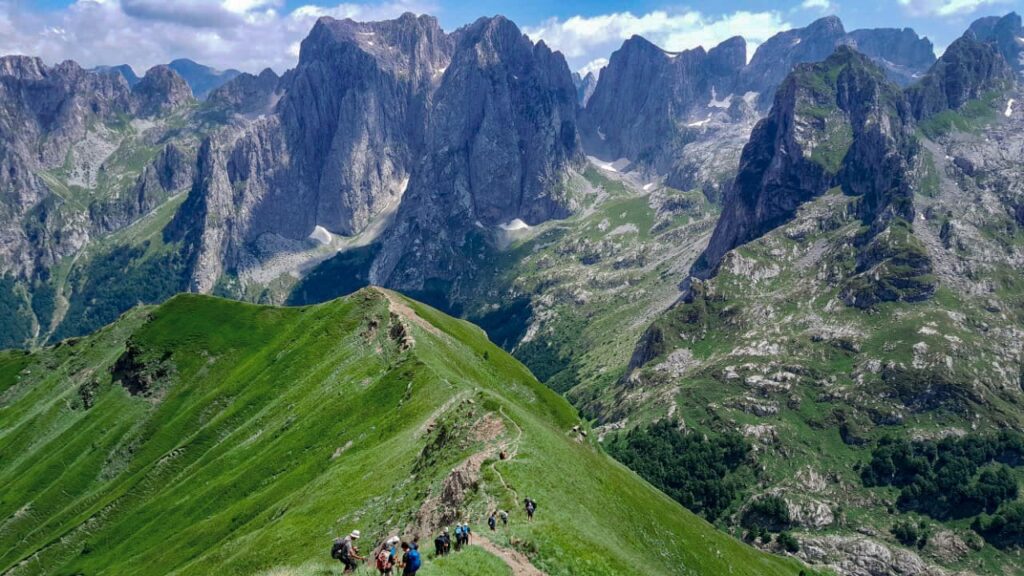
The Accursed Mountains are among the most dramatic and least-known ranges in Europe. Towering limestone peaks, deep glacial valleys, alpine lakes, high plateaus covered in wildflowers, dense pine forests dropping into river gorges, the landscape changes constantly across the trail’s 10 stages.
The highest points reach around 2,300 metres, and the total elevation gain across the full route is roughly 9,800 to 10,000 metres. That is serious mountain terrain and the views that come with it are earned.
4. The Trail Is Accessible Without Being Easy
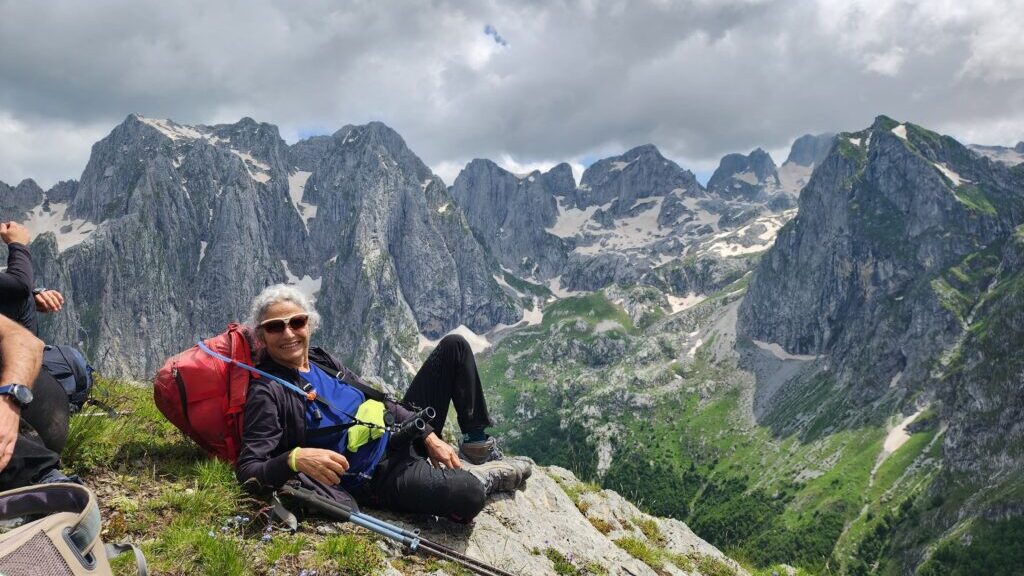
The Peaks of the Balkans is rated moderate in difficulty, which means it is within reach of any reasonably fit and well-prepared hiker, but it will still challenge you. Some stages last 8 to 9 hours. The terrain is varied, with rocky paths, river crossings, and exposed ridgelines.
You do not need technical climbing skills or crampons in summer. What you need is a good base level of fitness, solid hiking boots, the right gear, and a realistic sense of what a long mountain day feels like.
This balance genuinely challenging but not exclusive, is exactly what makes it so satisfying to complete.
5. The Hospitality Will Surprise You
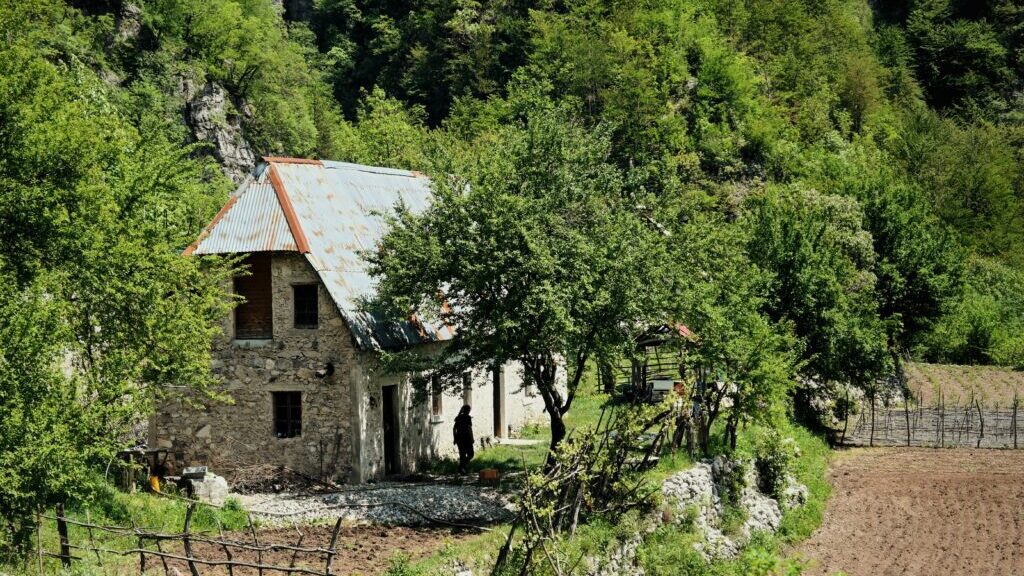
One of the things that catches first-time visitors to the Balkans completely off guard is the warmth of the people. Along the trail, accommodation is in family-run guesthouses small, simple, and full of character. Dinners are home-cooked from local produce. Hosts sit with you in the evenings. Stories are shared, rakija is offered.
This is not hotel tourism. It is something much more intimate and memorable.
These guesthouses are the backbone of the trail experience, and staying in them puts money directly into the hands of mountain families who have lived in these valleys for generations. It is sustainable travel in the truest sense. You can find a list of guesthouses along the route at peaksofthebalkans.info/guest-houses.
6. It Has a Remarkable History
The Peaks of the Balkans trail is not just a beautiful hike, it is a journey through a region shaped by extraordinary historical forces.
The ancient mountain paths that now form the trail were effectively sealed for decades during the War, when tensions between communist Yugoslavia and Albania closed these borderlands to ordinary movement. Communities that had traded and travelled across these mountains for centuries were suddenly cut off from one another.
The trail was revived and formalised through a development project partly supported by the German Development Agency as a way to reconnect these isolated communities and open them up to sustainable tourism. Every step you take on the Peaks of the Balkans carries that history with it.
7. You Can Do It Guided or on Your Own Terms
The trail works beautifully for both guided hikers and independent adventurers and there is a genuine range of options in between.
Guided tours with a local operator take care of everything: border permits, accommodation bookings, luggage transfers, and daily guiding by someone who knows every path and every village. Balkan Natural Adventure, based in Peja, Kosovo, offers a 10-day guided tour from €980 and a 6-day guided version from €765, both running in small groups with excellent guide-to-guest ratios.
Self-guided tours are available from €540, with full logistical support but the freedom to walk at your own pace. GPS tracks and detailed stage maps for independent hikers are available at peaksofthebalkans.info/map.
Whatever your style, there is a version of this trail that fits.
8. It Has Been Featured in the World’s Top Publications — for Good Reason
This is not an undiscovered secret anymore, the world’s best travel writers have found it, and what they have written speaks for itself.
Balkan Natural Adventure and the Peaks of the Balkans trail have been featured in The Financial Times, The Guardian, BBC Travel, Süddeutsche Zeitung, and Travel + Leisure. When publications of this calibre all point to the same place, it is worth paying attention.
9. The Best Season Is Long and the Logistics Are Simpler Than You Think
A common misconception is that the Balkans are hard to get to or complicated to navigate. In reality, the trail is well within reach for most European travellers and increasingly accessible for those coming from further afield.
The hiking season runs from June through September, with July and August offering the most stable conditions. Late June and September are quieter and cooler ideal for those who prefer fewer people on the trail.
You can fly into Pristina (Kosovo), Tirana (Albania), or Podgorica (Montenegro) — all served by major European airlines. Skopje in North Macedonia and Niš in Serbia are also viable entry points with onward ground transport.
10. It Will Change the Way You Think About Europe
This is perhaps the hardest reason to explain, and the most important one.
Most people who come to the Peaks of the Balkans arrive with some sense of what to expect mountains, hiking, beautiful scenery. What they leave with is something harder to put into words. A different sense of what Europe is. A reminder that there are still places where the land has not been over-managed, where communities still live close to the rhythms of the mountains, where hospitality is not a product but a genuine expression of who people are.
Kosovo, Albania, and Montenegro are not emerging destinations in the marketing sense of the phrase. They are places with deep histories, complex identities, and enormous natural beauty places that reward travellers who arrive with curiosity and respect rather than a checklist.
The Peaks of the Balkans is the best possible way to encounter them.
Ready to Go?
The 2026 season is open and guided tour dates are available now.
- 10 Days Peaks of the Balkans — Guided (from €980)
- 10 Days Peaks of the Balkans — Self-Guided (from €810)
- 6 Days — Guided (from €765)
- 6 Days — Self-Guided (from €660)
- 5 Days — Self-Guided (from €540)
Full trail information, maps, and GPX tracks: peaksofthebalkans.info
Guided and self-guided tours, border permits, ski touring: bnadventure.com
The Accursed Mountains are calling. All you have to do is say yes.
 English
  Deutsch
  Français
  Nederlands (België)
  עִבְרִית