Theth, Albania: Your Complete Destination & Trail Guide
What Is Theth? The Albanian Alps at Their Most Remote
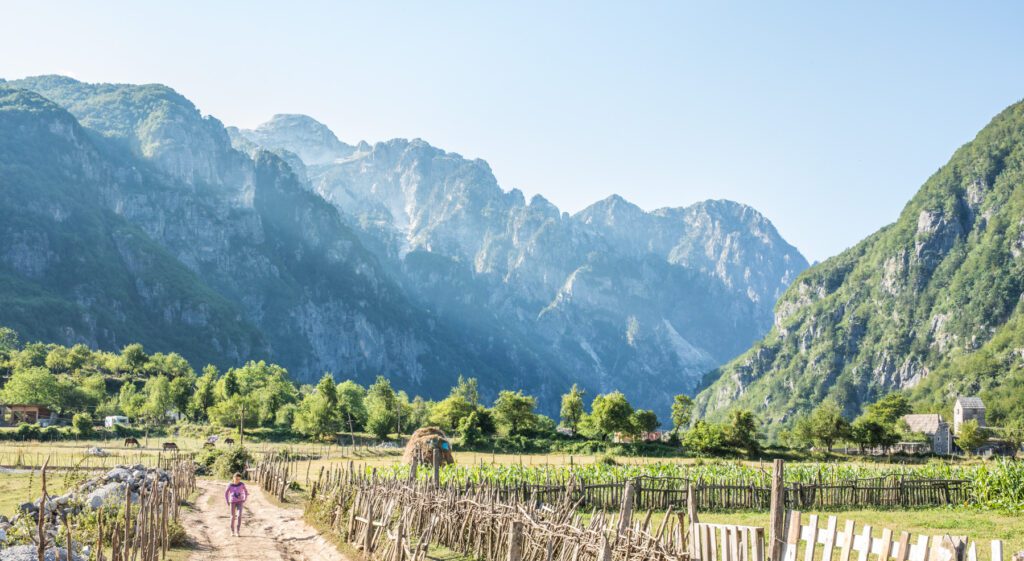
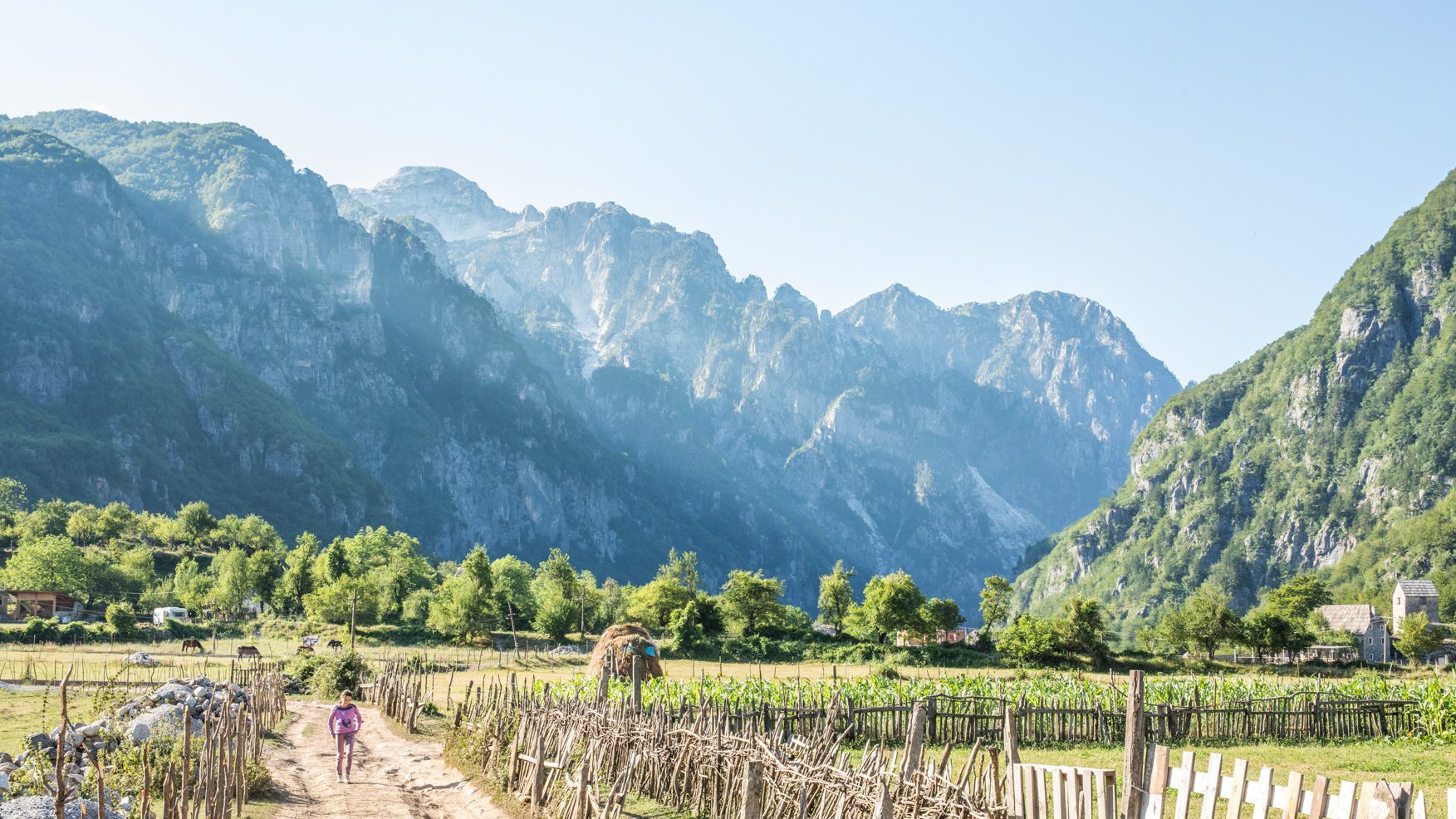
Theth (also spelled Thethi) is a village in Shkodër County, northern Albania, situated at approximately 780 metres elevation within Theth National Park, deep in the Albanian Alps, the range also known as the Prokletije. The village sits along the Theth River in a glacially carved valley surrounded by peaks that rise above 2,500 metres. Its permanent population is around 350 people, though this number swells considerably each summer as hikers and travellers arrive on the Peaks of the Balkans trail.
Theth has been inhabited for centuries. For most of its history it was accessible only on foot or by mule, a sealed road connecting it to Shkodër was not completed until 2012. That isolation shaped everything: the language, the architecture, the social code, and the landscape itself. The valley sits within a UNESCO Biosphere Reserve and forms a central node on the Peaks of the Balkans trail, the 192 km multi-country loop through Albania, Kosovo, and Montenegro. For hikers and travellers, it is the most recognisable Albanian name on that trail, and the one that rewards the most time.
Why People Are Discovering Theth Now
Theth has been on the radar of Balkans hikers for roughly a decade. It remains genuinely uncrowded by the standards of European mountain destinations. The Peaks of the Balkans trail, formalised and waymarked in the early 2010s, brought international attention to a valley that Albanian highlanders had known for generations. The result is a destination that is increasingly accessible but has not yet been commercialised.
This is not a place with a mountain gondola, a souvenir strip, or a branded visitor experience. Accommodation is entirely family-run. Meals come from the household kitchen. The guesthouses are clean, the food is honest, and the hospitality is what Albanian highlanders call “besa”,a code of honour that treats the guest as sacred. For travellers whose reference point is Kotor or Dubrovnik, Theth will feel like a different country. It is, in the best possible sense, the Balkans before the polish.
How to Get to Theth
From Shkodër (The Main Route)
The primary route to Theth runs from Shkodër, Albania’s fourth-largest city, by minivan (furgon). Shared furgons depart from the city centre, typically from near the main bus station, each morning, usually at around 7am, though this varies by season and demand. The journey takes 2.5 to 3 hours depending on road conditions, and covers roughly 70 km of increasingly narrow mountain road. The final section is unpaved and can be rough; the road is generally passable from May to October, but heavy rain or snow outside this window can make it impassable.
The cost is modest, typically 500–700 Albanian lek one-way. Organised transfers from Shkodër are also available through guesthouses, at a higher price but with more flexibility on timing. For travellers arriving from Tirana, the most efficient routing is an early bus or taxi to Shkodër, overnight in Shkodër if necessary, then the morning furgon.
Via the Komani Lake Ferry — The Scenic Approach
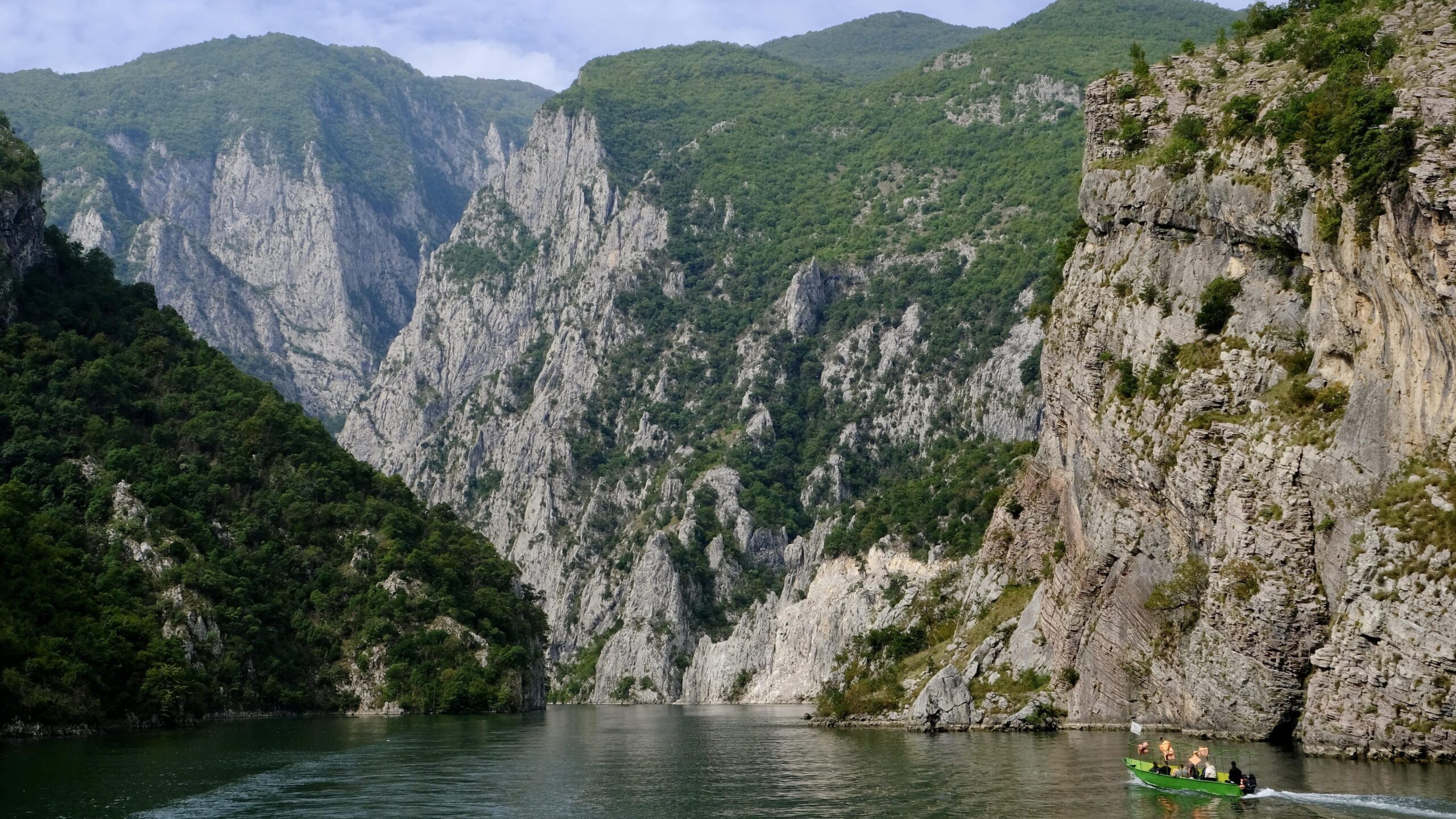
For those with a day to spare, the Komani Lake route is one of the most dramatic approaches to any mountain destination in Europe. From Shkodër, you travel to the Koman dam, a 90-minute journey, then board a ferry that navigates the fjord-like reservoir for approximately two hours to Fierzë. From Fierzë, a furgon connects to Valbona. From Valbona the only way is to stay the night and hike over the Valbona Pass into Theth.
This route transforms the approach into an experience in itself. The lake, hemmed in by limestone walls dropping directly to the water, has no road-equivalent, the ferry is the only way through. It is slower and requires more planning, but it is the introduction to the Albanian Alps that stays with you.
On Foot — Arriving from Valbona on the Trail
For hikers completing the Peaks of the Balkans trail or doing the Theth–Valbona crossing as a standalone hike, Theth is either the start or finish of the most celebrated single day on the trail. Arriving into Theth on foot, descending from the Valbona Pass into the green valley floor, is the experience most people come specifically for.
Things to Do in Theth
Theth National Park — Overview
Theth National Park covers approximately 2,630 hectares of the Albanian Alps, encompassing the village, the river valley, and the surrounding peaks. The park was established in 1966 and protects a landscape of dense beech and pine forest, glacial terrain, limestone karst, and the Theth River system. Wildlife within the park includes brown bears, wolves, chamois, golden eagles, and eagle owls, the kind of megafauna that has long since disappeared from most of Western Europe.
There is no entry fee for the park itself. The main visitor infrastructure consists of waymarked trails, guesthouses in the village, and a small park ranger presence in season. The park is managed with a light touch, this is not a theme-park experience, and that is the point.
Grunas Waterfall
The Grunas Waterfall is the most accessible natural attraction in Theth, a 25-metre cascade set in a narrow canyon approximately 2 km from the village centre. The walk from the village takes around 45 minutes on a clear path that follows the river upstream. The route is straightforward and suitable for all fitness levels, making it the default afternoon activity for visitors who have just arrived.
The waterfall is at its most impressive in June, when snowmelt keeps the flow strong. By August, the volume reduces but the canyon remains dramatic and the swimming hole at the base is cold and clear. The path is signposted from the village; wear shoes with grip as the rocks near the base can be slippery.
The Blue Eye of Theth (Syri i Kaltër)
Theth has its own Blue Eye, a natural spring that surfaces with extraordinary clarity and a vivid turquoise colour, fed by underground water filtered through limestone. It sits about 30 minutes’ walk from the village on foot, and unlike the more famous Blue Eye near Sarandë in southern Albania, this one remains almost entirely unvisited and uncommercialized.
Swimming is possible, though the water is cold even in midsummer, the spring maintains a near-constant temperature year-round. Morning is the best time to visit for the light, which hits the water directly and makes the colour most intense. There are no facilities, no entry fee, and no crowds.
The Lock-in Tower (Kulla e Ngujimit)
The Lock-in Tower — Kulla e Ngujimit in Albanian, is a 17th-century stone tower on the edge of the village, now functioning as a small museum. It is one of the most historically significant structures in the Albanian Alps and one of the few places where the logic of the kanun, the Albanian customary law that governed highland life for centuries, can be understood in physical form.
The gjakmarrja, or blood feud, was a mechanism of justice embedded in the kanun: a killing required a killing in return, and the cycle could run across generations. The Lock-in Tower was the refuge where men sheltering from a blood feud could stay, a kind of sanctuary where the rules of the feud were temporarily suspended. Stepping inside, with its metre-thick stone walls, narrow windows, and complete isolation from the outside, gives the abstraction of the kanun a concrete reality. The museum is small but the context it provides is significant for understanding the culture of the region.
Entry is typically free or a nominal donation. It is staffed seasonally.
Church of Theth
The Catholic Church of Theth was built in 1892 and is one of the oldest structures in the valley still standing in its original form. It sits on a slight rise at the edge of the village and is visible from most of the valley floor, a small, simple building with a distinctive stone exterior and a bell tower. The church reflects the Catholic identity of the Albanian highlanders of this region, which persisted through the Ottoman period and the communist-era religious prohibition. It is still in active use in summer when the village population rises.
Day Hikes from Theth
Beyond the Valbona trail and the waterfall, Theth offers several shorter walks. Okol Canyon is a gorge walk following the Theth River downstream through a dramatic limestone canyon, approximately 3 km one-way, 2–3 hours return, moderate difficulty. The Arapi Peak approach is a longer day hike toward the Arapi ridge (2,217 m), climbing steeply above the valley for panoramic views back down toward Theth and across to the Albanian Alps, demanding, 5–6 hours return, significant elevation gain. The valley floor walks, gentle paths connecting the scattered farmhouses and guesthouses through hayfields and past traditional stone houses, are what most visitors do in the late afternoon when the light is best.
The Theth to Valbona Trail — Complete Hike Guide
Trail Overview
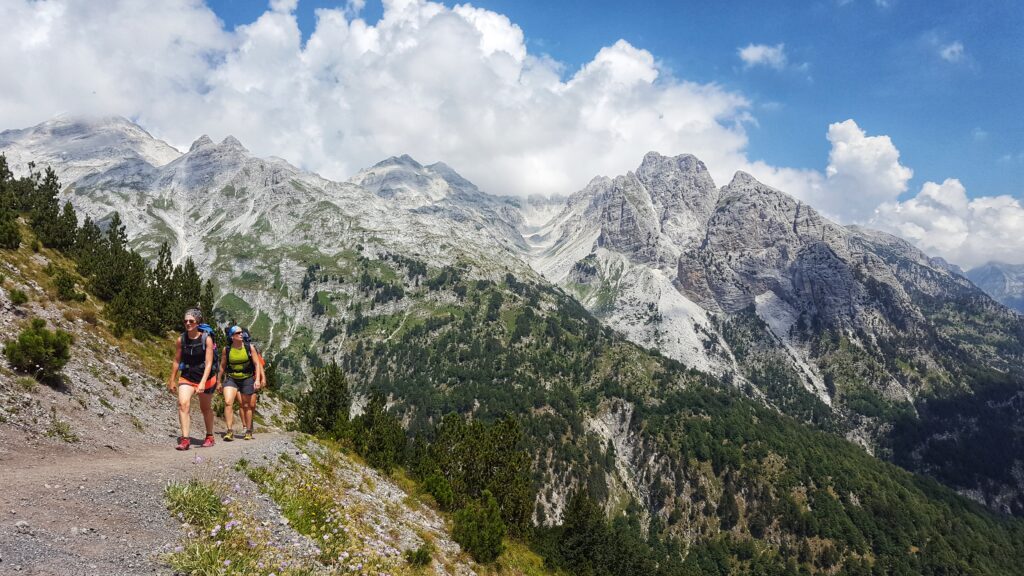
The Theth to Valbona hike is one of the great single-day mountain crossings in Europe. The statistics: approximately 13 km point-to-point, around 1,100 m of elevation gain, highest point at the Valbona Pass (1,800 m), typical completion time 6 to 8 hours. It is graded moderate to hard, primarily because of the sustained climb to the pass and the steep knee-testing descent into Valbona Valley on the other side. It is a one-way route, most hikers start from Theth and finish in Valbona, where accommodation and transport await.
Both directions are possible, but Theth-to-Valbona is more common and, in the opinion of most hikers who have done it both ways, the better direction: the view from the Valbona Pass down into the Valbona Valley at the moment you crest the ridge is one of the defining images of the trail. Planning to do this stage with a guide? Book the guided Peaks of the Balkans tour with BNA Adventure.
Starting Early — Why It Matters
Leave Theth by 7am at the latest, ideally earlier. The Valbona Pass is exposed, and afternoon thunderstorms are a daily occurrence throughout July and August, they typically build from around 2pm and can arrive faster than expected. Starting early puts you at the pass by mid-morning, safely descending before any weather develops.
Snow on the pass is possible until late May, and in heavy snow years it has persisted into the first weeks of June. Check with your guesthouse before departing, they will know the current conditions. The trail is not safe in snow unless you have experience and appropriate gear.
GPX Download and Maps
A GPX track for the Theth to Valbona hike is available for download from the trail overview page. Download your offline map before departing Theth, there is no mobile signal on the trail above the treeline, and GPS navigation is a safety requirement in poor visibility at the pass. GPS files
What to Pack for the Hike
Footwear: hiking boots with ankle support are mandatory. Trail runners are manageable in dry summer conditions but not recommended. Walking poles are strongly recommended for the descent.
Water: carry at least 2 litres from the start. There are no reliable water sources on the ascent to the pass. Natural springs exist lower down, but do not depend on them being accessible.
Clothing: the pass is significantly colder than the valley, even in summer. A windproof layer and a mid-layer are essential. A waterproof shell is worth the weight given the afternoon storm risk.
Food: there is nothing between Theth and Valbona. Bring enough for a full day. Your guesthouse can usually prepare a packed lunch on request.
Pack weight: keep it light. This is not an overnight route. Leave non-essentials at the guesthouse.
Where to Stay in Theth
All accommodation in Theth is family-run guesthouses, bujtina in Albanian. There are no hotels, no chains, and no booking platforms that cover most properties. The culture of the guesthouse is central to the Theth experience: you sleep in a private or shared room, dinner and breakfast are prepared by the family, and the evening is spent at a long communal table with other travellers and often members of the family.
Well-established guesthouses include Guesthouse Polia, Guesthouse Rupa, Guesthouse Shpella, and a handful of others that have been in operation for years and are known to the hiking community. Full board, dinner, bed, and breakfast, is the standard arrangement and represents excellent value.
Camping is possible in designated areas near the village and is a legitimate option for those carrying their own tent. Wild camping on the trail to Valbona is not advisable for safety reasons.
Book ahead for July and August. The village fills up and the best guesthouses turn people away in peak season. September, which offers the best weather and the smallest crowds, still requires advance booking but is easier than peak summer.
Best Time to Visit Theth
May brings snow risk on the pass, a quiet road, and very few visitors. June opens the trail, wildflowers, long days, light crowds. July and August are peak season: book well ahead, and expect afternoon thunderstorms daily. September is the month that experienced Balkans travellers consistently recommend, stable weather, fewer people, no storms, and a quality of light that July cannot match. October brings cool nights and dramatic skies, with some guesthouses beginning to close. From November to April, the road may close and most guesthouses shut; hiking is not recommended.
The valley is still green in September, the trees are beginning to turn, and the village is quieter in a way that feels like a privilege.
For earlier hike please listen to this Podcast
Practical Information for Theth
Mobile Signal
Vodafone Albania has partial signal in the lower part of the village. Signal is intermittent and not reliable enough for navigation or communication outside the immediate village area. There is no signal on the trail above the treeline. Download offline maps, inform someone of your planned route and expected arrival time, and do not depend on your phone for navigation above the forest.
Money
Albania’s currency is the lek (ALL). There are no ATMs in Theth. The nearest ATM is in Shkodër. Bring sufficient cash from Shkodër before you arrive, guesthouses, the waterfall trail, any local purchases are cash only. An amount of 10,000–15,000 lek per person per night (with meals) is a reasonable estimate for Theth expenses, but bring more than you think you need. Based on 2026 prices.
Food and Water
All guesthouses serve meals. There are no restaurants or cafés in the conventional sense, food in Theth comes from the guesthouse kitchen. Meals are typically based on what the family produces: vegetables from the garden, dairy from the farm, meat grilled over wood, and cornbread baked fresh. It is some of the most genuinely local food available anywhere in the Balkans.
Tap water in the village is safe to drink, it comes from mountain springs. On the trail, treat or filter any water taken from natural sources.
Safety on the Trail
The Theth to Valbona hike is not a casual walk, and it should not be treated as one. Do not hike alone to the Valbona Pass. Inform your guesthouse of your planned departure time and expected arrival in Valbona. Check the weather forecast, your guesthouse can help with this. There is no mountain rescue service operating in this area. In the event of an accident above the treeline, you are a long way from help. This is not a reason not to go, it is a reason to go prepared.
Theth as Part of the Peaks of the Balkans Trail
Theth is the Albanian centrepiece of the Peaks of the Balkans, the 192 km trail loop that passes through Albania, Kosovo, and Montenegro. It sits roughly at the midpoint of the Albanian section, connected to Valbona to the west and to the village of Cerem and the onward route toward Kosovo to the east. For hikers doing the full loop, Theth is typically where the trail settles into its rhythm, where the accommodation improves, where the scenery hits its peak, and where the culture of the Albanian highlands becomes fully legible.
The trail as a whole takes 10 to 14 days to complete at a comfortable pace. Theth is usually a rest day for those doing the full circuit, the village, the waterfall, and the Lock-in Tower are enough to fill a day off the trail, and the guesthouses are comfortable enough to make recovery worthwhile.
For those not doing the full loop, the standalone Theth–Valbona crossing is one of the great single-day hikes in the Balkans.
Frequently Asked Questions About Theth
What is Theth, Albania?
Theth is a mountain village in Shkodër County, northern Albania, located at 780 m elevation in Theth National Park within the Albanian Alps (Prokletije). It is a key stage on the Peaks of the Balkans trail and one of the most visited destinations in the Albanian highlands.
Is Theth worth visiting?
Theth is worth visiting for anyone interested in mountain hiking, authentic rural culture, or genuinely off-the-beaten-path Balkan travel. It offers dramatic scenery, intact traditional culture, and some of the best hiking in southeast Europe at a fraction of the cost of comparable Alpine destinations.
How hard is the Theth to Valbona hike?
The Theth to Valbona hike is approximately 13 km with 1,100 m of elevation gain and is rated moderate to hard. The climb to the Valbona Pass (1,800 m) is sustained and steep, and the descent is demanding on the knees. Typical completion time is 6 to 8 hours. It is achievable for reasonably fit hikers with appropriate footwear.
Can I do the hike without a guide?
Yes. The trail is well-waymarked with red-and-white paint blazes and a GPX track is widely available. A guide is not required in good conditions. However, in poor weather or early/late season when snow is a possibility, local knowledge is valuable and hiring a guide is advisable.
What is the Lock-in Tower in Theth?
The Lock-in Tower (Kulla e Ngujimit) is a 17th-century stone tower in Theth village, now a small museum. It served as a place of refuge for men sheltering from blood feuds under the Albanian customary law code known as the kanun. Men could stay in the tower without being targeted, as the rules of the feud were suspended within its walls.
Is Theth safe for solo travellers?
Theth village is very safe for solo travellers, including solo women. The guesthouse culture means you are rarely alone — meals are communal and the environment is welcoming. The trail to Valbona carries the standard mountain risks: do not hike it alone, inform your guesthouse of your plans, and check the weather before departing.
When is the best time to visit Theth?
September is the best month: stable weather, no afternoon thunderstorms, fewer crowds, and the landscape at its most dramatic. June is excellent for wildflowers and long days. July and August are peak season, noisier and more crowded, but conditions are reliable. May has snow risk on the pass.
How much does it cost to stay in Theth?
Full board in a Theth guesthouse (dinner, bed, and breakfast) typically costs €20–30 per person per night. The furgon from Shkodër costs around 500–700 lek (€5–7) each way. Theth is one of the most affordable mountain destinations in Europe. Based on 2026 prices.
Is the Blue Eye of Theth different from the Blue Eye near Sarandë?
Yes — they are completely different locations. The Blue Eye (Syri i Kaltër) near Sarandë in southern Albania is a large, well-known tourist attraction with facilities and an entry fee. The Blue Eye in Theth is a smaller, entirely natural spring with no facilities, no fee, and very few visitors. Both are fed by underground limestone aquifers and share the vivid turquoise colour, but the Theth version is a quieter, more intimate experience.
 English
  German
  French
  Dutch
Dutch  Hebrew