Vuthaj (Vusanje), Montenegro: Mountain Village at the Foot of the Accursed Mountains
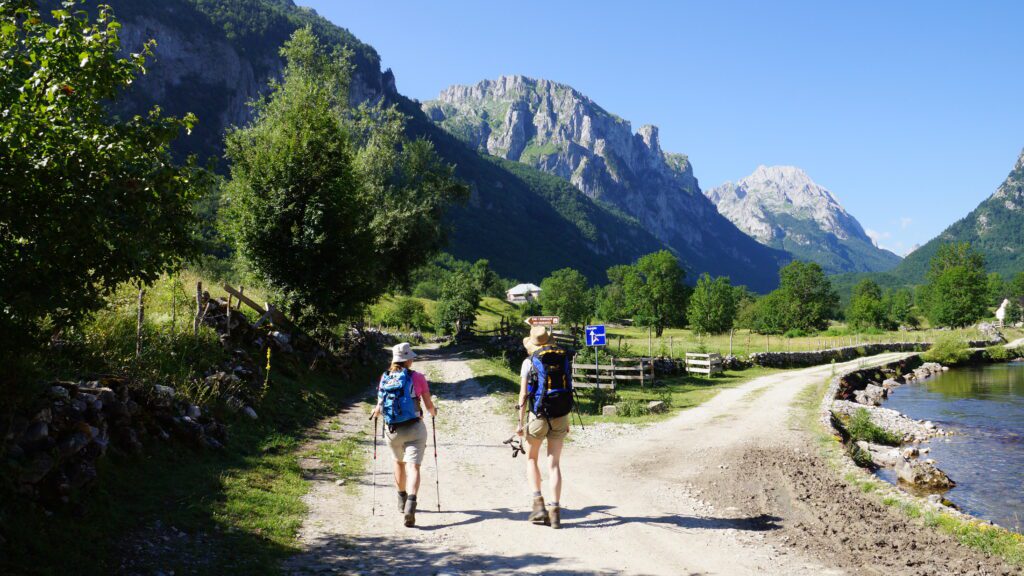
Vuthaj — official Montenegrin name: Vusanje (Cyrillic: Вусање) — is a small mountain village in Gusinje Municipality, Montenegro, located in the Accursed Mountains near the Albanian border. It sits at approximately 900 metres elevation at the entrance to the Ropojana River valley, where the valley floor meets the first steep walls of the Montenegrin Alps. The surrounding peaks rise above 2,500 metres.
The village has a population of a few hundred people, predominantly Albanian-speaking and Muslim. It lies roughly 10 km from the town of Gusinje and around 20 km from Plav — the nearest town of any size.
The name exists in two forms. Vuthaj is the Albanian name, derived from the Albanian vushë (maiden) combined with the place-name suffix -aj — roughly “place of the maiden.” Vusanje (Вусање) is the official Montenegrin and Serbian administrative name. Both refer to exactly the same settlement. You will encounter both on trail maps, guesthouse signs, and GPS devices depending on which country produced them. Albanian pronunciation: approximately “VOOT-high.”
Vuthaj on the Peaks of the Balkans Trail
Vuthaj sits on the Montenegrin section of the Peaks of the Balkans trail — the 192 km multi-country loop through Albania, Kosovo, and Montenegro. It falls between the highland plateau of Babino Polje (reached from the Kosovo side via Drelaj) and the town of Gusinje, which connects onward to Plav.
For hikers moving in the standard counter-clockwise direction, Vuthaj comes after the long descent from Babino Polje and before the approach to the Ali Pasha Springs and Gusinje. It is not a full stage destination in most itineraries — more typically a waypoint passed through, or a base from which hikers access the Ropojana valley the following morning. For those who prefer to break the stage earlier rather than push all the way to Gusinje in one day, the guesthouses in Vuthaj are the place to stop.
- Distance from Babino Polje: approximately 8–10 km on trail
- Distance to Gusinje: approximately 6–8 km
- Distance to Plav: approximately 20 km by road
Getting to Vuthaj from Babino Polje
From Babino Polje, hikers descend through the Montenegrin highlands toward the Ropojana valley on a well-waymarked trail. Full stage details and accommodation along this section are covered in the Peaks of the Balkans accommodation guide.
The Village of Vuthaj
Vuthaj is small. There is no commercial centre, no restaurant strip, no tourist infrastructure in any conventional sense. What exists is a cluster of traditional stone houses — some rebuilt in concrete in recent decades — spread across a narrow strip of valley floor between the river and the steep slope behind. The Ropojana River runs alongside the settlement, clear and cold, fed by snowmelt and mountain springs.
The community is Albanian-speaking and predominantly Muslim, reflective of the historical demographics of the Gusinje area. Life in Vuthaj follows the rhythms of highland pastoralism: cattle and sheep, haymaking in summer, wood fires in winter. The people who greet hikers passing through are used to travellers, but have not been turned into a tourism industry by them. Hospitality here is genuine and unstageable.
What a visitor actually sees: a mountain road running through a valley, farmhouses set back from it, the river below, forest rising steeply on both sides, and peaks in every direction. In late June the meadows are cut for hay and the smell drifts across the whole valley. In September the light turns golden in the afternoon and the valley goes completely still.
The Ropojana Valley
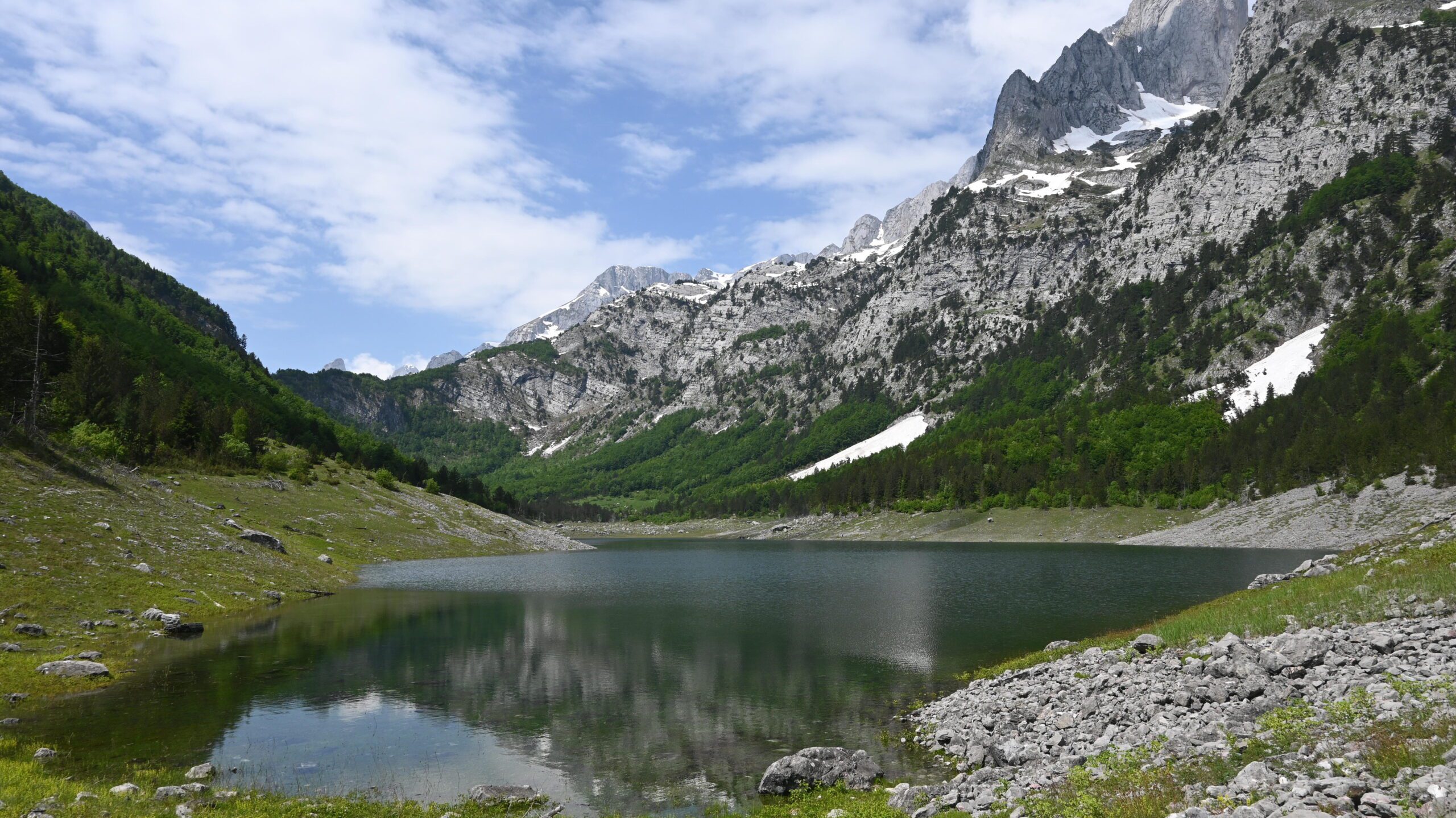
Vuthaj sits at the mouth of the Ropojana valley — one of the most dramatic river gorges in the western Balkans. The Ropojana River has carved a canyon through the limestone of the Accursed Mountains over millennia, producing sheer walls that rise hundreds of metres above the river in places. The water runs turquoise in summer, and the silence inside the gorge is the specific silence of places humans rarely reach.
The upper Ropojana — accessible on foot from Vuthaj — opens onto mountain meadows and high ridges that form the border with Albania. This is Accursed Mountains terrain at its most raw: no marked trail beyond a certain point, no facilities, no reliable maps below ridge level. Experienced mountain walkers can reach the high ground; casual day-walkers can follow the valley floor for several hours and feel the full scale of the landscape without the technical difficulty.
The Ali Pasha Springs
The Ali Pasha Springs (Ali-pašini izvori), located near Gusinje approximately 8 km from Vuthaj, are among the most remarkable natural features on the entire trail. Multiple large springs emerge simultaneously from limestone aquifers at the base of a mountain wall — creating a river from nowhere. They are the source of the Ropojana River and are considered one of the natural wonders of Montenegro.
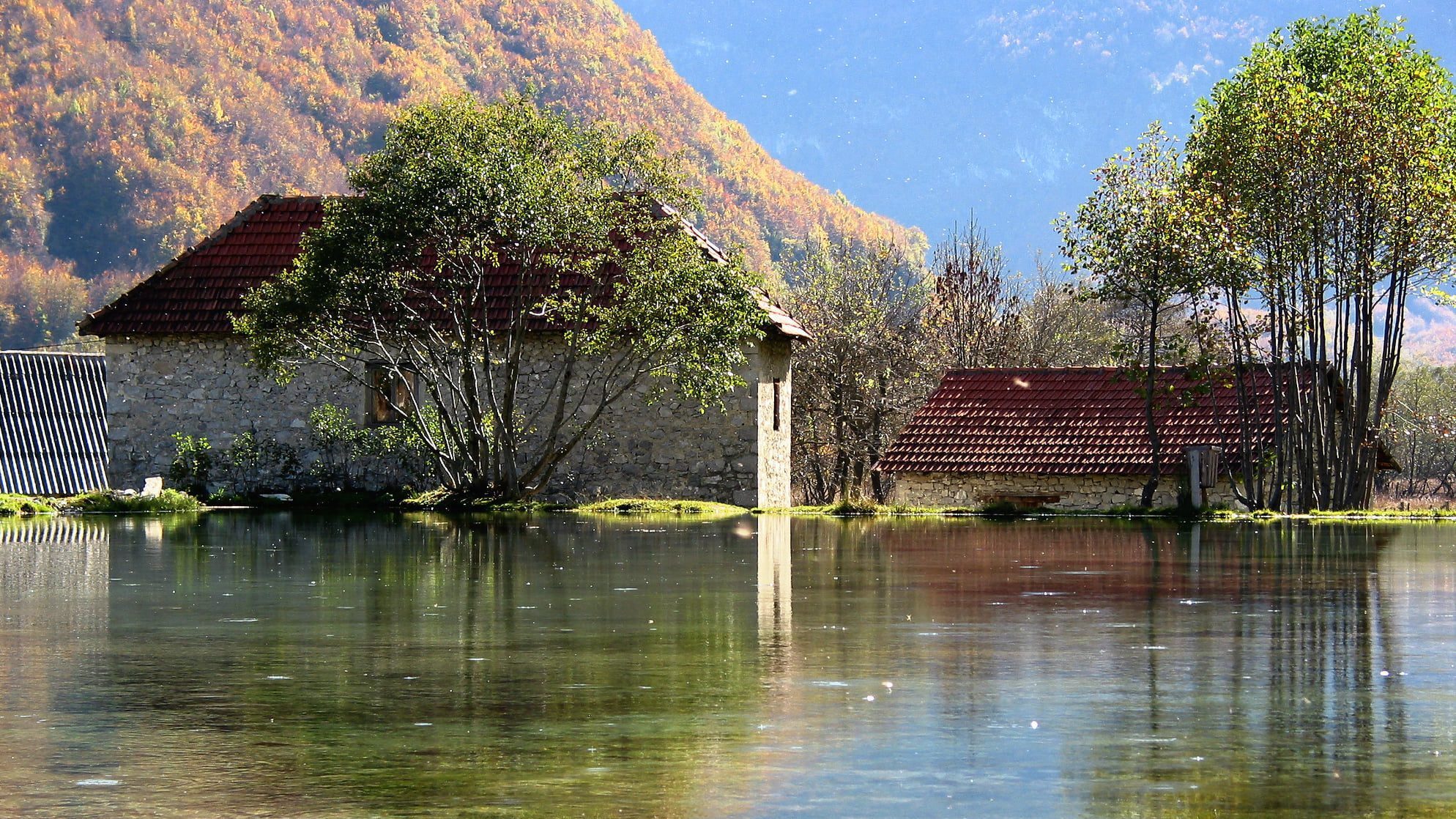
The walk from Vuthaj to the springs along the valley is one of the best half-day walks on this section of the trail. Do it even if you are continuing to Gusinje the same day — it adds almost nothing to your total distance and changes the walk entirely.
Best Time to Visit Vuthaj
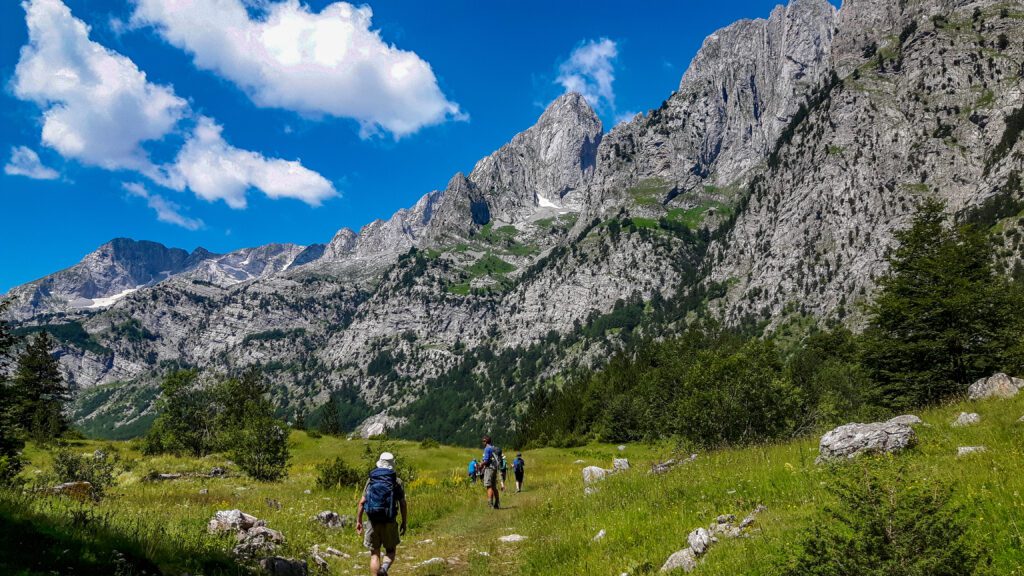
June–September is the primary season. The trail is fully open, the Ropojana valley is at its most accessible, and guesthouse accommodation is reliably available.
June brings wildflowers to the meadows and strong river flow from snowmelt. The valley is at its greenest and the light is excellent for photography.
July–August is peak season on the Peaks of the Balkans trail. Vuthaj is quieter than Theth or Valbona, but advance booking for accommodation is still advisable.
September is the best month: stable weather, emptier trails, and the first hints of autumn colour in the forest.
October brings cold nights and the possibility of early snow on the high passes. Some guesthouses begin to close. The valley itself remains accessible and beautiful.
Winter is not recommended for hiking. The road can become impassable in heavy snow, and accommodation is unlikely to be open without advance arrangement.
Where to Stay in Vuthaj
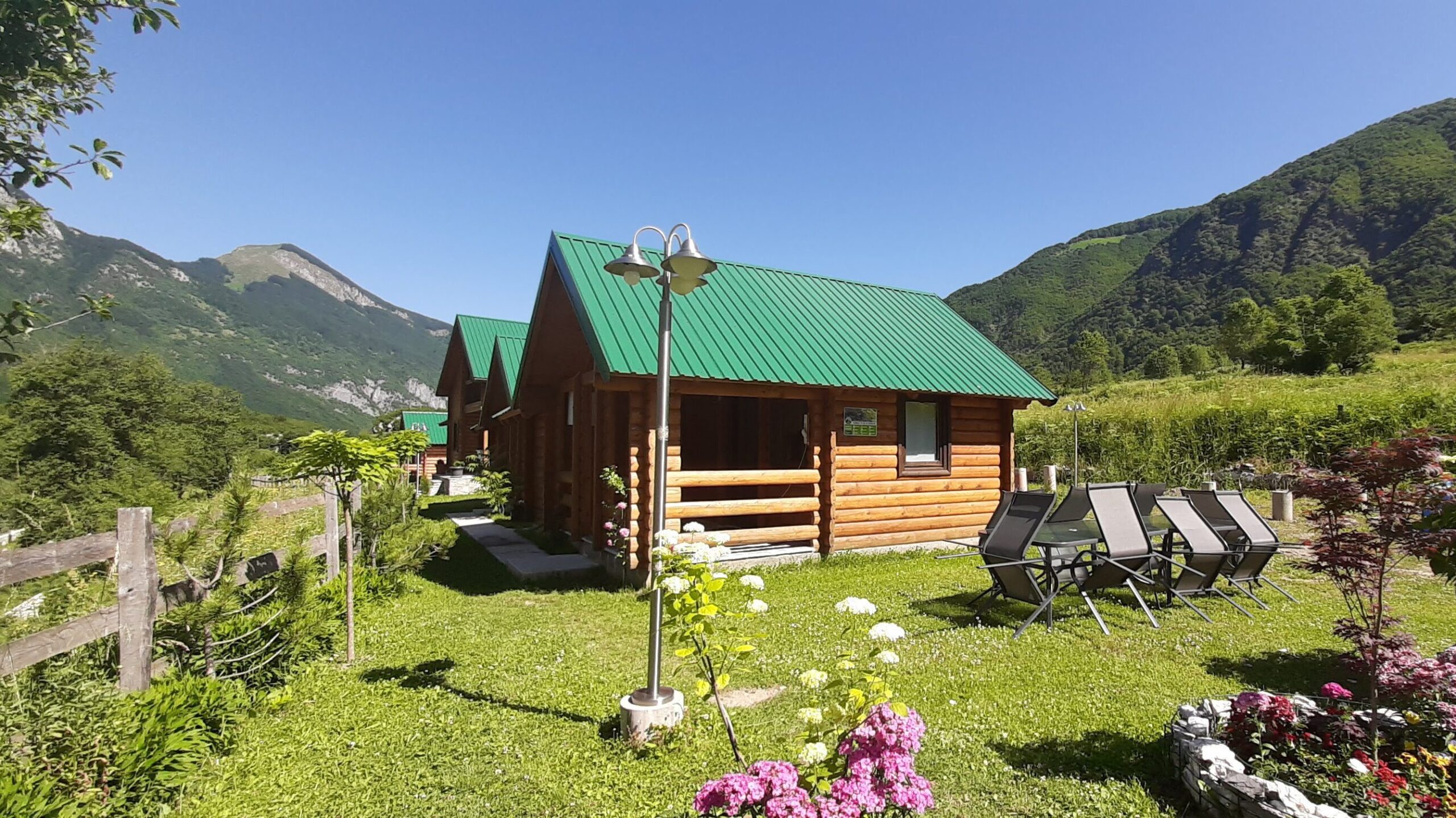
Accommodation in Vuthaj has expanded significantly in recent years. A growing number of family-run bujtina are spread throughout the village, and during the summer season they can fill quickly — advance booking is recommended.
Most stays operate on a cash-only basis and include full board. Prices remain low by European standards — typically €35–50 per person per night with meals included. Vuthaj does not see the same demand as Theth or Valbona, but booking ahead in June, July, August, and September is still advisable.
Because accommodation is spread throughout the village rather than concentrated in one area, pay attention to where exactly your guesthouse sits relative to your hiking itinerary. The right choice can save you unnecessary extra walking at the start or end of your day.
Camping is possible in the wider Ropojana Valley. Plav and Gusinje also offer a range of accommodation options and are easily accessible alternatives if Vuthaj is full.
The Albanian Community of Vuthaj
The presence of an Albanian-speaking community in this corner of Montenegro is not accidental. It reflects centuries of settlement in the Accursed Mountains that predate modern national borders. The area around Gusinje and Plav has historically been home to Albanian-speaking Muslim communities who have lived under different administrations — Ottoman, Montenegrin, Yugoslav, and Montenegrin again.
In 2014, Gusinje was recognised as a separate municipality — a decision that acknowledged the distinct identity of the Albanian community there and gave it greater local autonomy. Vuthaj, as part of Gusinje Municipality, sits within this broader context of Albanian-Montenegrin coexistence.
The kanun — the Albanian customary law code also found in the Albanian Alps — historically governed social relations in communities like Vuthaj alongside formal state law. Its influence has weakened, but traces of its logic remain in how guests are received, how disputes are handled, and how the household is organised.
A village that is administratively Montenegrin, culturally Albanian, linguistically distinct from both official languages, and named twice in two tongues is not a generic mountain waypoint. Hikers who take ten minutes to understand that context get something different from those who just pass through.
Practical Information
Mobile Signal
Mobile coverage in Vuthaj is limited. T-Mobile Montenegro and Telenor Montenegro both have nominal coverage in the area, but signal in the valley is unreliable — particularly inside buildings and in the upper Ropojana gorge. Download offline maps before leaving Gusinje or Plav. Do not rely on your phone for navigation or communication in the upper valley.
Currency and Payments
Montenegro uses the euro (EUR) despite not being an EU member. Guesthouses in Vuthaj are cash only. There are no ATMs in the village — the nearest are in Gusinje (approximately 6–8 km) and Plav (approximately 20 km). Carry sufficient cash before arriving.
Frequently Asked Questions About Vuthaj
What is Vuthaj, Montenegro?
Vuthaj (official name: Vusanje) is a small mountain village in Gusinje Municipality, Montenegro, located in the Accursed Mountains near the Albanian border. It is a waypoint on the Peaks of the Balkans trail between the Babino Polje highland and the town of Gusinje, sitting at the entrance to the Ropojana River valley.
What is the difference between Vuthaj and Vusanje?
There is no difference — Vuthaj and Vusanje refer to the same village. Vuthaj is the Albanian name; Vusanje is the Montenegrin/Serbian administrative name. Both are in active use depending on the language of the source.
What does Vuthaj mean?
Vuthaj derives from the Albanian word vushë (maiden) combined with the place-name suffix -aj, giving a meaning roughly equivalent to “place of the maiden.” The Albanian pronunciation is approximately “VOOT-high,” with stress on the first syllable and the “j” sounding like the English “y.”
Is there accommodation in Vuthaj?
Yes — several family-run guesthouses now operate in Vuthaj, offering full board in a traditional mountain setting. Advance booking is recommended in July and August. Gusinje and Plav both offer additional options if guesthouses in Vuthaj are full.
How do I get to Vuthaj on the Peaks of the Balkans trail?
Approaching from Kosovo, hikers descend from the Babino Polje highland and reach Vuthaj after approximately 8–10 km. From Gusinje (the opposite direction), the trail follows the Ropojana valley for 2–3 hours. The trail is waymarked with red-and-white markers throughout.
What is near Vuthaj?
The Ropojana River valley and canyon begin immediately beyond Vuthaj and offer some of the most dramatic landscape on the Montenegrin section of the trail. The Ali Pasha Springs (Ali-pašini izvori), one of the natural wonders of Montenegro, are approximately 8 km away near Gusinje. The Accursed Mountains National Park surrounds the area and is accessible on foot from the village.
 English
  Deutsch
  Français
  Nederlands (België)
  עִבְרִית